YOUR CHINOOK WAWA WORD OF THE DAY: TAMAHNOUS

TAMAHNOUS

 [ta-MAH'-no-us] or [tam-án-a-was] or [tamá-nawas] or [tah-MAH'-na-wis] — noun, verb, adjective

Meaning: Spirit; Guardian spirit; Personal Spirit; Ghost; Goblin; Witch; Magic; Luck; Fortune; Slight of hand; One's particular forte, specialty, or strength

Origin: Several possible, perhaps convergent etymologies:

Chinook, itamánawas 'guardian or familiar spirit; magic, luck, fortune; anything supernatural' >i-ta-mánwash (spirit creature) 

Sahaptin tamánwit ‘law, government’, esp. that of Nature as spelled out by Coyote, the mythological emissary of the creator and law-giver, who was known as tamanwilá > tamánwi ‘create, ordain’ 

Nimipuutímt tamálwi ‘lead, plan, legislate’


A word with multiple spellings and slight pronunciation variation, including, but not limited to: tomahnous, tamanass, tahmahnawis, tamánawas, tamanawass, and tamanawaz [This document will use the slightly more common ‘tamahnous’ for sake of clarity] to describe some form of spiritual or supernatural power. It is a concept similar in many ways to that of wakd or mahopa of the Oceti Sakowin; manitowi of the Algonquin; pokunt of the Shoshone; orenna or karenna of the Mohawk, Cayuga, and Oneida; urente of the Tuscarora; the iarenda or orenda by the Huron; kami of the Japanese; kamuy of the Ainu; fylgja or hamingja of the Norse; and mana of the Melanesian and Polynesian cultures.

One’s “tamahnous” can be their guardian spirit, who gives them their strength, or can be an evil spirit out to steal  one’s soul. The word is used as a noun, a verb or as an adjective according to whether it means a spirit is invoking the supernatural, or is ascribing magic powers either to men or to some object used as a charm. 

An invective level one step higher than “mesachie”, when used to mean "bad". “Mesachie tamahnous” (demon, fiend, witchcraft, necromancy) was a title usually assigned to an evil spirit of some kind, as seen in the expression "klale tamahnous" (black magic, the Devil).

A sudden or unseasonal storm might be referred to as a “tamahnous wind” (preternaturally big wind, very bad storm), while a particularly vile imperialist might be referred to as “tamahnous whiteman” (damned whiteman; devilish whiteman)

However, “tamahnous” also has a general (and potentially benign) meaning associated with magic or the supernatural that need not convey evil or malice, whereas “mesachie” has no such supernatural context and is always evil or malicious. People were often aided or helped by a “kloshe tamahnous” (good spirit). Traditional healers would “mamook tamahnous” (conjure, make magic) to cure many ills, and the title “tamahnous man” (sorcerer, wizard, conjurer) would be applied to an indigonus doctor or ‘medicine man’.

The book Ten Years in Oregon (Daniel Lee & Joseph H. Frost, 1844) features two references to the word:

It is firmly believed that [medicine-men] can send a bad “tam-an-a-was” into a person, and make him die.

[...] there were but two men in the whole clan that had the Elk “tamanawas,” that is, the spirit of the elk hunter.

There also exists a Chinookan word that made its way into Chinook Wawa, “tah” (a spirit;  supernatural thing or person), which together with “tamahnous” appear in The Forgotten Tribes: Oral Tales Of The Teninos And Adjacent Mid-Columbia River Indian Nations (Donald.M. Hines, 1991). An excerpt, collected April 1921 from an unknown informant, sheds some possible light onto the concept of “tamahnous” as a personal spirit power:

A band of Umatilla hunters were in camp. A great eagle was soaring, circled and soared overhead, far up in the skies. An aged Tahmahnawis man was challenged to bring down the eagle with his Tah.

He said: “I can do that.” The old hunter “shot” his Ta hmahnawis at the bird, but to no purpose. The eagle continued soaring.

It was then that a younger man said: “You are too old. You cannot kill the eagle with your Tahmahnawis power. I will now kill the eagle with my power.”

Suiting action to his words, the young man “shot” his tahmahnawis at the eagle which immediately came tumbling down through the air, falling dead neart the camp. The aged Indian made no comment. He had been beaten by his younger companion.

Early observers usually referred to these spirit powers by the Chinook Jargon term tamahnous, as in “tamahnous dancing” or “tamahnous spirit”. In the rather biased document Ten Years Of Missionary Work Among The Indians at Skokomish, Washington Territory (Myron Eells 1886), “tamahnous” is described at great length, stating:

Another great difficulty in the way of their accepting Christianity is their religion. The practical part of it goes by the name of ta-mah-no-us, a Chinook word, and yet so much more expressive than any single English word, or even phrase, that it has almost become Anglicized. Like the Wakan of the Dakotas, it signifies the supernatural in a very broad sense. There are three kinds of it.

Black Tamahnous Rattle.

Black Tamahnous Rattle.

First. The Black Tamahnous. This is a secret society. During the performance of the ceremonies connected with it, all the members black their faces more or less, and go through a number of rites more savage than any thing else they do. They do not tell the meaning of these, but they consist of starving, washing, cutting themselves, violent dancing, and the like.
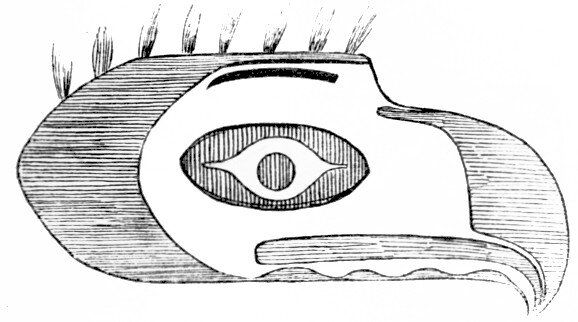
Bird Mask Used in the Black Tamahnous Ceremonies by the Clallams.

Bird Mask Used in the Black Tamahnous Ceremonies by the Clallams.

It was introduced among the Twanas from the Clallams, who practiced it with much more savage rites than the former tribe. It is still more thoroughly practiced by the Makahs of Cape Flattery, who join the Clallams on the west. It was never as popular among the Twanas as among some other Indians, and is now practically dead among them. It still retains its hold among a portion of the Clallams, being practised at their greatest gatherings. It is believed that it was intended to be purifical, sacrificial, propitiatory.
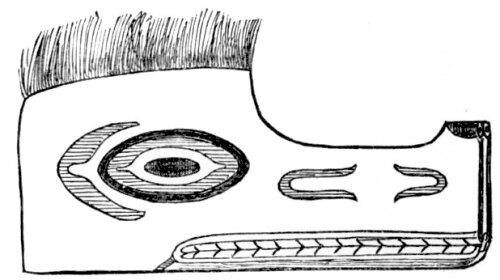
Swine Masks Used in the Black Tamahnous Ceremonies by the Clallams.

Swine Masks Used in the Black Tamahnous Ceremonies by the Clallams.

Second. The Red, or Sing, Tamahnous. During the performance of its ceremonies, they generally painted their faces red. It was their main ceremonial religion. During the fall and winter they assembled, had feasts, and performed these rites, danced and sang their sacred songs; it might be for one night, or it might be for a week or so. Sometimes this was done for the sake of purifying the soul from sin. Sometimes in a vision a person professed to have seen the spirits of living friends in the world of departed spirits, which was a sure sign that they would die in a year or two, unless those spirits could be brought back to this world. So they gathered together and with singing, feasting, and many ceremonies, went in spirit to the other world and brought these spirits back.

Mask Used in the Black Tamahnous Ceremonies by the Clallams.[The markings are of different colors. The wearer sees through the nostrils.]

Mask Used in the Black Tamahnous Ceremonies by the Clallams.

[The markings are of different colors. The wearer sees through the nostrils.]

This spirit-world is somewhere below, within the earth. When they are ready to descend, with much ceremony a little of the earth is broken, to open the way, as it were, for the descent. Having traveled some distance below, they come to a stream which must be crossed on a plank. Two planks are put up with one end on the ground and the other on a beam in the house, about ten feet above the ground, in a slanting direction, one on one side of the beam, and the other on the other side, so that they can go up on one side and down on the other. To do this is the outward form of crossing the spirit-river.

If it is done successfully, all is well, and they proceed on their journey. If, however, a person should actually fall from one of these planks, it is a sure sign that he will die in a year or so. They formerly believed this to be so, but about twelve years ago a man did fall off, and did die within a year, so then they were certain of it. Having come to the place of the departed spirits, they quietly hunt for the spirits of their living friends, and when they find what other spirits possess them, they begin battle and attempt to take them and are generally successful. Only a few men descend to the spirit-world, but during the fight the rest of the people present keep up a very great noise by singing, pounding on sticks and drums, and in similar ways encourage those engaged in battle. Having obtained the spirits which they wish, they wrap them up or pretend to do so, so that they look like a great doll, and bring them back to the world and deliver them to their proper owners, who receive them with great joy and sometimes with tears of gratitude. At other times they go through other ceremonies somewhat different. This form has now mostly ceased among the Twanas, but retains its hold among a large share of the Clallams. The Christian Indians profess wholly to have given it up.

Black Tamahnous Mask.

Black Tamahnous Mask.

Third. The Tamahnous for the sick. When a person is very sick, they think that the spirit of some bad animal, as the crow, bluejay, wolf, bear, or similar treacherous creature, has entered the individual and is eating away the life. This has been sent by a bad medicine-man, and it is the business of the good medicine-man to draw this out, and he professes to do it with his incantations. With a few friends who sing and pound on sticks, he works over the patient in various ways.

This is the most difficult belief for the Indian to abandon, for, while there is a religious idea in it, there is also much of superstition connected with it. As the Indian Agent at Klamath, Oregon, once wrote: “It requires some thing more  than a mere resolution of the will to overcome it.” “I do not believe in it now,” said a Spokane Indian, “but if I should become very sick, I expect I should want an Indian doctor.” It will take time and education to eradicate this idea. It is the only part of tamahnous, which I think an Indian can hold and be a Christian, because it is held partly as a superstition and not wholly as a religion. Some white, ignorant persons are superstitious and, at the same time, are Christians. The bad spirit which causes the sickness is called a bad tamahnous. Soon after I first came here, we spent several evenings in discussing the qualifications of church membership, the main difference of opinion centering on this subject of tamahnous over the sick. I took the same position then that I do now, and facts seem to agree thereto; for, among the Yakamas, Spokanes, and Dakotas, who have stood as Christians many years through strong trials, have been some who have not wholly abandoned it, it remaining apparently as a superstition and not a religion.


Additional information can be gleaned from the book Life at Puget Sound: with sketches of travel in Washington Territory, British Columbia, Oregon & California (Caroline C. Leighton,1884), which details some cultural practices centered around the concept of “tamahnous”:

AUGUST 2, 1865.

We went this morning to an Indian Tamáhnous (incantation), to drive away the evil spirits from a sick man. He lay on a mat, surrounded by women, who beat on instruments made by stretching deer-skin over a frame, and accompanied the noise thus produced by a monotonous wail. Once in a while it became quite stirring, and the sick man seemed to be improved by it. Then an old man crept in stealthily, on all-fours, and, stealing up to him, put his mouth to the flesh, here and there, apparently sucking out the disease.

APRIL 30, 1866.

In the winter we were told, that, when the spring came fully on, the Indians would have the "Red Tamáhnous," which means "love." A little, gray old woman appeared yesterday morning at our door, with her cheeks all aglow, as if her young blood had returned. Besides the vermilion lavishly displayed on her face, the crease at the parting of her hair was painted the same color. Every article of clothing she had on was bright and new. I looked out, and saw that no Indian had on any thing but red. Even old blind Charley, whom we had never seen in any thing but a black blanket, appeared in a new one of scarlet.

NOVEMBER 20, 1866.

To-day we met on the beach Tleyuk (Spark of Fire), a young Indian with whom we had become acquainted. Instead of the pleasant “ Klahowya” (How do you do?), with which he was accustomed to greet us, he took no notice of us whatever. On coming nearer, we saw hideous streaks of black paint on his face, and on various parts of his body, and inquired what they meant. His English was very meagre; but he gave us to understand, in a few hoarse gutturals, that they meant hostility and danger to any one that interfered with him. We noticed afterwards other Indians, with dark, threatening looks, and daubed with black paint, gathering from different directions. The old light-keeper was launching his boat to cross over to the spit, and we turned to him for an explanation. He warned us to keep away from the Indians, as this was the time of the “Black Tamáhnous,” when they call up all their hostility to the whites. He pointed to some Indian children, who had a white elk-horn, like a dwarf white man, stuck up in the sand to throw stones at. I had noticed for the last few days, when I met them in the narrow paths in the woods, that they stopped straight before me, obliging me to turn aside for them.


These practices invoking, venerating, and practicing “tamahnous” were directly targeted by the Canadian government, as seen in the third section of the 1876 Indian Act, a totalitarian law of repression which declared that:

“Every Indian or other person who engages in or assists in celebrating the Indian festival known as the "Potlatch" or in the Indian dance known as the "Tamanawas" is guilty of a misdemeanor, and liable to imprisonment for a term of not more than six nor less than two months in any gaol or other place of confinement; and every Indian or persons who encourages ... an Indian to get up such a festival ... shall be liable to the same Punishment.”


Today the word (and its many spellings) lends itself to a variety of place names and institutes:

Tomahnous Peak, located on the southeast side of the Tatshenshini River, on the divide between Tomahnous Creek and the Tkope River in British Columbia.


512x512bb.jpg

Tamanawis Secondary is a public secondary school located in in Surrey, British Columbia.


Tamanawas_Falls_from_Behind.jpg

Tamanawas Falls forms a broad curtain where Cold Spring Creek thunders over a 33.5 meter (110-foot) lava cliff near the eastern base of Mount Hood in Oregon.
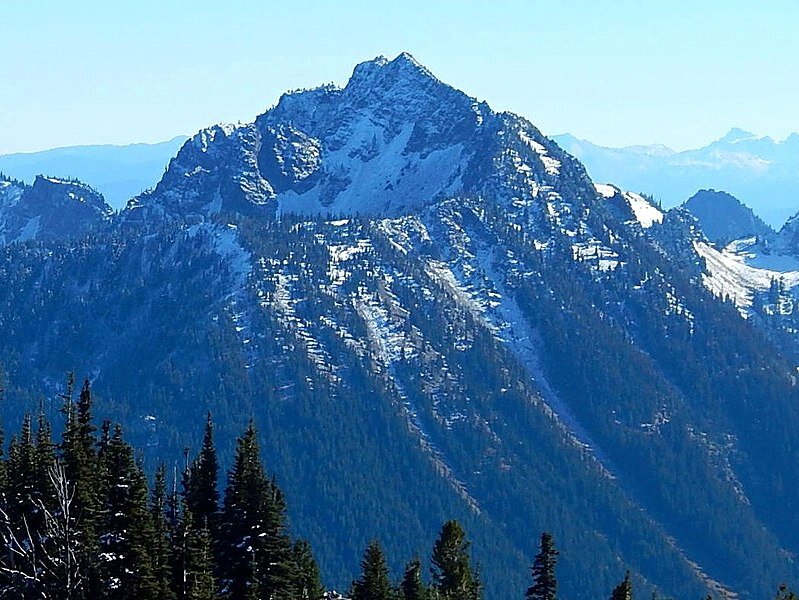

Tamanos Mountain is a 2,069.5 meter (6,790-foot) summit located in Mount Rainier National Park in Washington.


h2004.71.4.01.jpg

The Tamahnous Theatre Workshop Society (later Tamahnous Theatre) in Vancouver, British Columbia was founded in 1971 by John Gray.  It specialized in experimental theatre, particularly collective creation. Following the theatrical principles of Polish director Jerzy Grotowsky, Tamahnous (a Chilcotin work for magic), experimented with form and focused on inner experience realized through visual images. By 1981, Tamahnous had produced 38 plays, 21 of which were original. The first shows were performed in the Vancouver Arts Centre. When Larry Lillo succeeded John Gray in 1974, the company relocated to the Vancouver East Cultural Centre. The company eventually closed in the mid-90s, but the Tamahnous Archives are housed at Simon Fraser University Library in Burnaby, British Columbia.

Your Chinook Wawa Word of the Day: Salal

SALAL 

[SAL'-AL]  — noun.

Meaning: The salal shrub or its berries.The salal berry; fruit of Gualtheria shallon.

Origin: Chinook klkwushala 'salal berries'.

Sometimes called ‘sallal’ or ‘shallon’, the salal (Gaultheria shallon) is an evergreen shrub, restricted mainly to the Cascadian coastline which possess clustered dark-purple berrylike fruit about the size of the common grape.  Before the coming of Euro-Americans, it was one of the most valued native fruits, and was gathered in large quantities by the coastal First Nations. Both its berries and young leaves are both edible and are efficient appetite suppressants, each with a unique flavor. Salal berries were a significant food resource for the people of the First Nations who would eat them fresh, make a sort of syrup, from them, or dry and press them into tick, brick-like cakes for winter storage. They were also used as a sweetener, and the Haida used them to thicken salmon eggs. The leaves of the plant were also sometimes used to flavor fish soup.

In modern times, salal berries are used locally in jams, preserves, and pies, and are often combined with Oregon-grape because the tartness of the latter is partially masked by the mild sweetness of the salal.

Gaultheria shallon has also been historically used for its medicinal properties; the leaves have an astringent effect, making it an effective anti-inflammatory and anti-cramping herb, and a poultice of the leaf can be used externally to ease discomfort from insect bites and stings. Furthermore, the leaves prepared in a tea or tincture are thought to decrease internal inflammation such as bladder inflammation, stomach or duodenal ulcers, heartburn, indigestion, sinus inflammation, diarrhea, moderate fever, inflamed / irritated throat, and menstrual cramps.

Salal02.jpg

Your Chinook Wawa Word of the Day: Shot Olallie

Shot Olallie

[shot O-lal'-lie] or [shat U-lal-i] — noun.

Meaning: huckleberry

Origin: English shot “bullet; lead” + Heiltsuk, olallie “salmon berry”; Chinook, ulali, “berry”

The Red Huckleberry (vaccinium parvifolium) is a species native to western North America, where it is common in forests of Cascadia. In the Oregon Coast Range, it is the most common variety, occurring mostly at low to middle elevations in soil enriched by decaying wood and on rotten logs, from sea level up to 1,820-meter (6,000 ft).

The First Nations of Cascadia found the plant and its small, shot-sized fruit very useful; the bright red, acidic berries were used extensively for food throughout the year. Fresh berries were eaten in large quantities, or used for fish bait because of the slight resemblance to salmon eggs. Berries were also dried and often into brick-like cakes for later use. Dried berries were stewed and made into sauces, or mixed with salmon roe and oil to eat at winter feasts.

The bark or leaves of the plant were brewed for a bitter cold remedy, made as tea or smoked.[2] The branches were used as brooms, and the twigs were used to fasten western skunk cabbage leaves into berry baskets.

800px-Mount_Seymour_Provincial_Park,_BC_(DSCF8610).jpg

Your Chinook Wawa Word of the Day: Seahpo olallie

Seahpo olallie

[se-áh-po O-lal'-lie] or [se-áh-pult U-lal-i] — noun.

Meaning: Raspberry

Origin: French, chapeau  “hat”, “cap” + Heiltsuk, olallie “salmon berry”; Chinook, ulali, “berry”

There are several varieties of raspberry in Cascadia, including the Snow Raspberry (Rubus nivalis), which is native to northwestern North America: British Columbia, Washington, Idaho, and far northern California, and the White Bark Raspberry (Rubus leucodermis), who’s range extends from Alaska to as far south as Mexico.

90664-00-BAKIE_20120504200500.jpg

Cascadia is also home to the Arctic raspberry (Rubus arcticus), a species found in arctic and alpine regions in the Northern Hemisphere from Alaska-Yukon all the way across Eurasia to the Fenno-Scandian peninsula, is sometimes known as the ‘nagoon’ or ‘nagoonberry’, a name which derives from the Tlingit neigóon

Raspberries and leaves are rich in iron and they also contain minerals-phosphorus, potassium, magnesium, which help build the blood by carrying iron from stores in the liver, spleen, and bone marrow to needy tissues.

Raspberry leaves can be used fresh or dried in herbal teas, providing an astringent flavor as well as relief from nausea women might experience while pregnant, as well as  assists contractions and checks hemorrhage during labor and delivery.

Your Chinook Wawa Word of the Day: Amote

AMOTE

[a-MO'-teh] or [a-MU-tee],  occasionally corrupted into [al-mo'-ta] — noun.

Meaning: Strawberry (plant or fruit)

Origin: Chinook amuti; Clatsop tl’amōte, “strawberry”.

Fragaria chiloensis, the ‘beach strawberry’ or ‘coastal strawberry’, is one of two species of wild strawberries that were hybridized to create the modern garden strawberry. The plant’s natural range is the Pacific Ocean coast, from Alaska to California, though migratory birds have dispersed the plant from the Pacific coast of North America to the mountains of Hawaii, Chile, and Argentina.

In addition to serving as a food source, the whole strawberry plant, including leaves and roots, can be used for purposes of cleansing the system, both a blood purifier and blood builder; the wild strawberry is a laxative, diuretic and astringent, and the leaves and berries are rich in iron as well as contain small amounts of magnesium, potassium and sodium.

DSC_1254.jpg

New PRIDE Gear is in!

Just in time for Pride, we are so excited for our first ever Cascadia PRIDE Resource kits, and a whole host of new Cascadia gear. For the first time, we’ve got a whole range of Non-Binary, Trans and Rainbow pins, stickers, patches and flags, and have also just created a new Cascadia “Progress” Lapel Pin, and have created a new PVC velcro stick Cascadia Rainbow Pride Patch. Because of popular demand, we’ve also re-upped our Cascadia PRIDE stickers with the trans colors in the trees.

Your Chinook Wawa Word of the Day: Olallie

Olallie

[O-lal'-lie] or [U-lal-i] — noun.

Meaning: Berry; berries; fruit

Origin: From a Lower Chinook úlili ‘salmon-berry'; Heiltsuk, olallie “salmon berry”

Originally this word referred only to salmon-berries (Rubus spectabilis), but in Chinook Wawa it grew to mean any sort of "pil olallie" (red berry), along the Salish Sea it became a catch-all for any sort of berry. One can collect “piah olallie" (ripe berries) to both eat and to make into  "olallie chuck" (berry juice). Though introduced by Europeans, grapes would come to be called “wain olallie” (wine berries), and naturally the grapevine was called “wain olallie stick” (wine berry tree). This also leads to two heady archaisms for wine, “wain ti” (wine tea) or “wain olallie yaka chuck” (wine berry’s water).

The unincorporated communities of Olalla, WA, and Olalla, BC are named after local adaptations of this word, as is Ollala Dam and its associated reservoir, Ollala Lake, which are located near Siletz. There is an Ollala Creek in Oregon and British Columbia, as well as an Olallie Creek in Washington.

Reporting on Ecotopia: Cross-border environmental media in the Salish Sea & Cascadia

Reporting on Ecotopia: Cross-border environmental media in the Salish Sea & Cascadia

This panel forum opens questions about the evolution of media and news venues in our cross-border region. Featuring a slate of outstanding journalists covering environmental issues in our region, we will explore questions like:

  • How do regional media address transboundary issues, such as the energy economy, political regulation, and climate change policy?

  • What is the role of media producers and consumers in fostering cross-border conversations around the Salish Sea and more broadly throughout Cascadia?

  • What is the future of place-based news to address shared crises and solutions in our shared bioregion?

Share a Post, Join our Cascadia Day Raffle!

Share a Post, Join our Cascadia Day Raffle!

Tag us in a picture or post about Cascadia, and you’ll be automatically entered to win lots of Cascadia gear that we’ll be giving out during the day and next day. We'll be sharing images & reposting all day, so make sure to give us a tag at @cascadiabioregion on facebook and instagram, and @cascadiadept on twitter. and you’ll be entered to win some of our Cascadia Giveaways, including several bundles with t-shirts, flags, masks, stickers, passports and more.

Happy May 18th, Cascadia Day!

Happy May 18th, Cascadia Day!

From the mountains to the sea, our home features some of the most diverse, beautiful and dynamic landscapes in the entire world. Our people are as diverse as the beauty that surrounds us. We are abundantly blessed and therefore celebrate a holiday to highlight our uniqueness and diversity and as a reminder of our responsibility to act as faithful stewards of the wondrous bounty with which we are endowed. Happy Cascadia Day!

Your Chinook Wawa Word of the Day: Klahanie

KLAHANIE

[KLA'-ha-nie], [KLA'-a-ni], or occasionally [klagh-anie'] — adverb

Meaning: Out; outside; outdoors; without; exterior.

Origin: Chinook  tlakhani “out”; “outside”.

‘Klahanie’ (sometimes rendered as ‘klahani’, ‘klahhanie’, or ‘klaghanie’) means ‘outside’, but can be used to describe a variety of actions relating to the external, such as “mamook klahanie okoke” (put that outside), "chako klahanie" (to emerge from; to come out from; to be delivered), and "mahsh klahanie" (to throw out; eject). One mgiht be eager to get "klahanie kopa house" (out of the house) for a bit, or someone might suggest  "klatawa nesika klahanie kopa town" (let us go away from the city) as a prelude to a camping trip. Be careful with your phrasing though. If you’re “klahanie”, you’re ‘outside’, but to “klatawa klahanie” or “go klahanie”, it can mean you’re on your way to a “klahanie house” (restroom; outhouse).

Klahanie is often used in place names for “the great outdoors”; There’s a Klahanie Road on the way to Whistler, BC, a Klahanie Lodge in Port Angeles, Washington, and Klahanie, Washington is planned community between the cities of Sammamish and Issaquah.

Klahanie was also the title of a popular 35 minute-long TV series on the CBC about the wilderness and outdoor activities, while also taking viewers to see some of the flora and fauna of some of the most beautiful and inaccessible parts of the world. Attention was also given to the subject of environmental conservation and protection, as well as to skills required for survival in some of the more rugged realms of nature in the world. Originating in Vancouver, BC and produced by Andy Snider, the longtime popular program aired from 1967-1978, first being hosted by  Bob Fortune [1967-1972] and later by Don White [1972-1978].

Intro to Klahanie (1973)

Your Chinook Wawa Word of the Day: Illahee

ILLAHEE

[IL'-la-hie] or occasionally [ilee-ee]  — noun.

Meaning:  Country, land, ground, earth, region, district, soil, dirt, the place where one resides.

Origin: Chinook, ilahekh  ‘land’, ‘earth’ < From a Lower Chinook stem -lkh, preserved intact in the Kathlamet and Upper Chinook forms ilkh 'land'; contracted in Lower Chinook due to the presence of a following accented vowel: thus, ilíi 'land, country'

Sometimes rendered as ‘illahie’, ‘illahe’, or in the case of Grand Ronde Chinook Jargon, ‘ili'i’, the word encompasses concepts like “land”, "earth”, and "country", and lends itself to a number of terms related to these concepts.

A “stick illahee” (forest) differed from a “tupso illahee” (prairie; pasture), while “kloshe illahee” has a similar meaning, but could also be used to mean a garden, a plot of land, a farm, or a ranch. The phrase “saghallie illahie” (mountain; highland) would later take one the additional meaning of  “sacred ground” and even “Heaven” as seen in the Christian neologisms "Saghalie Tyee yaka Illahee" (God, His Country) and "Keekwullie Illahee" (Hell).

A graveyard or cemetery was referred to as a “memaloose illahee”, while explorers would mark "tzum illahee" (surveyed land) on their maps, and one could refer to something as “hyiu illahie kopa” (dirty), or state "okoke illahee yaka hyas kloshe" (this land is very good).

Of course, “illahee” could refer to the land in both a physical and a political senses; someone might ask "kah mika illahee?" (where is your country? where do you come from?), since Illahee could also be used to denote "delate yaka illahee" (one's native land), such as "Boston Illahee" (United States), "Passaiooks Illahee" (France), "King George Illahee" or “Kingchauch Illahee" (England). It is worth noting that, as far as members of the First Nations were concerned, all other white Europeans came from “Dutchman Illahee” or “Dutchman yaka illahee” as they commonly expressed it.

Within Cascadia, “illahee” could also be used to specify specific areas, such as "siwash illahee" (First Nations territory; Reservation), or even more specifically, “Chinook Illahee” would be the term for the Chinook-speaking region or the land of the Chinook people (the lower Columbia)

Of course, one could also go the opposite direction and apply illahee to big-picture concepts, such as "konaway okoke illahee" (the world) and "konaway illahee konaway kah" (the universe).

The word ‘illahee’ and its variations lends itself to a number of names in Cascadia:

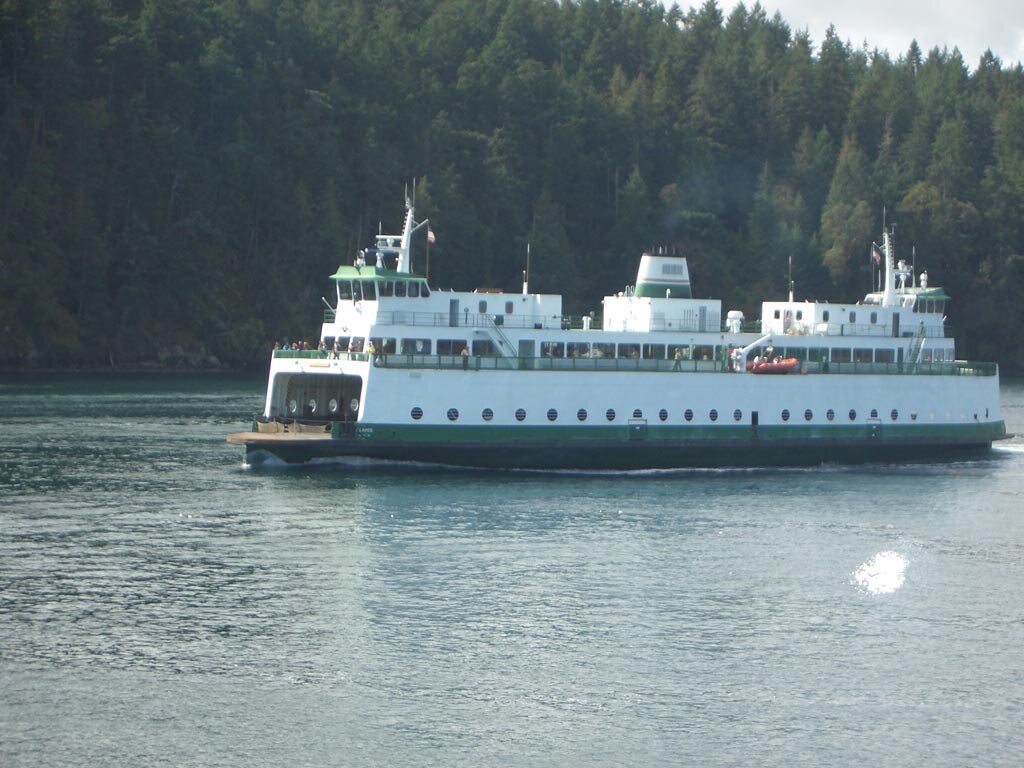
SanJuans_ferry.jpg

The MV Illahee was a Steel Electric Class ferry operated by Washington State Ferries which served on the inter-island route in the San Juan Islands.

The entire Steel Electric class was withdrawn from service on November 20, 2007 due to hull corrosion issues. In the summer of 2009, the Illahee and her sisters were sold to Eco Planet Recycling, Inc. of Chula Vista, California.

In August, 2009 the ferry was towed out of Eagle Harbor and was scrapped in Ensenada, Mexico.


Illahe, Oregon is an unincorporated community located in the Klamath Mountains along the Rogue River about 13 kilometers (8 miles) upriver from Agness, Oregon. The area was home to Takelma people, then to white and Karok settlers, before becoming part of the Rogue River–Siskiyou National Forest. In the 21st century, it is a stopping place for hikers, boaters, and other visitors. The area has a riverside lodge and a nearby campground, both named Illahe.

Illahee, Washington is an unincorporated community that lays between Bremerton and Silverdale. The Port of Illahee community dock was built around 1916 to serve the Puget Sound Mosquito Fleet, and in later years this port was used by the United States Navy to demagnetize ships.

Illahee State Park is an 82-acre (33 ha) Washington state park located in the hamlet of Illahee, just north of eastern Bremerton, on Port Orchard Bay, and is part of the Washington State Park System. The park was established when Kitsap County donated 13 acres to the state in 1934. The park's old-growth stand is home to one of the nation's oldest Pacific yews, which has been standing for approximately 400 years.

The Illahe Vineyards and Winery, located near Salem, Oregon, is an 80-acre vineyard in the Willamette Valley. Committed to dry agriculture and responsible water practices, the winery does not utilize electricity or machinery, and is one of Oregon’s few horse-powered vineyards, utilizing a team of Percheron draft horses to mow and deliver grapes to the winery at harvest.


Other locations include Illahee Meadows, which can be found 22 kilometers (13.6 miles) northeast of Clinton, British Columbia, and Illahee Elementary School is located in Camas, Washington.


Your Chinook Wawa Word of the Day: Sitkum

SITKUM

[SIT'-kum] —  noun, adjective.

Meaning: Half; half of something; part of something; the middle.

Origin:  From Chinookan; both inflected (noun) and uninflected (particle) n-shitkum ‘I am half’; a-shitkum ‘she is half’; shítkum '(at the upper) half'; Clatsop asitko,

The word sitkum is used to describe either of two equal or corresponding parts into which something is or can be divided. This is best seen in the term for a "sitkum dolla" (half dollar; fifty cents), though it is also be applied to varying degrees of, or corresponding parts into which something is or can be divided, as seen in "elip sitkum" (more than half) and "tenas sitkum" (less than half; quarter; a small part of something)

Perhaps the largest use of the word sitkum was related to seasons, such as “sitkum kopa waum illahee” (midsummer), and times of the say, as seen in "elip sitkum sun" (forenoon), “sitkum sun” (noon; midday), “kimtah sitkum sun" (afternoon) and “sitkum polaklie" (midnight; half a night). It even appears in the locational descriptor “kah sun mitlite kopa sitkum sun" (south).

The word sitkum also lends it name to Sitkum Glacier, located on the west slopes of Glacier Peak, immediately south of Scimitar Glacier in Washington. Sitkum is also the name of an unincorporated community in Coos County, about 43.5 km (27 miles) north of the hamlet of Remote in the Southern Oregon Coast Range near the East Fork Coquille River. 

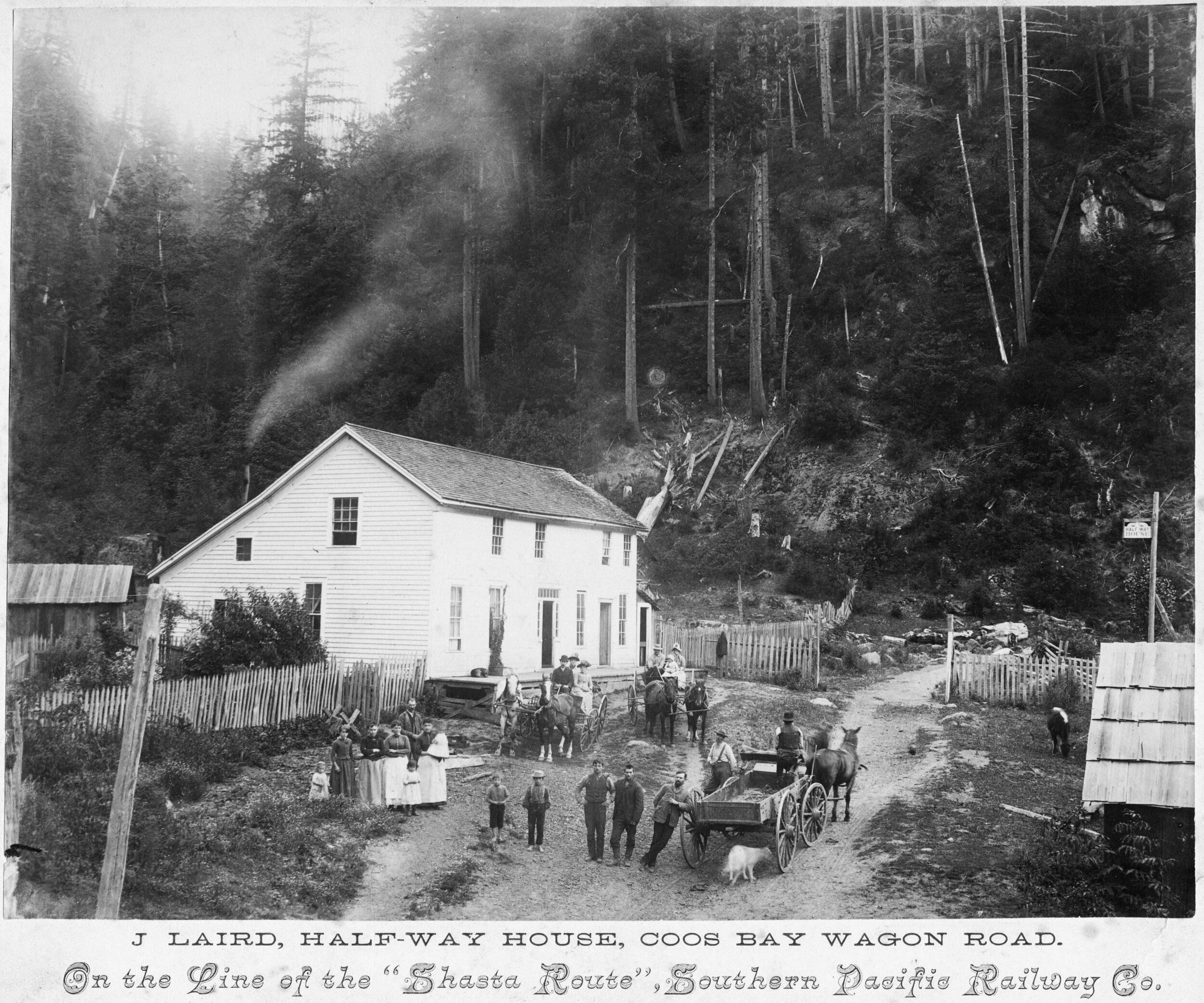
In 1872, John Alva Harry and his wife Chloe (Cook) Harry set up a roadhouse that they called ‘Sitkum’—later known as the Halfway House— as a stagecoach stop near a point halfway between Roseburg and Coos City on the Coos Bay Wagon Road. The establishment was a combination restaurant, tavern, rooming house, and telegraph station where travelers could stop to eat while horses were changed or spend the night.

James Laird Halfway House in Sitkum, Oregon

James Laird Halfway House in Sitkum, Oregon

In the following years the small citizenry of Sitkum would also build a post office and grade school.

Sitkum Post OfficeJames, Daniel, and Nancy Belle (Harry) Laird property. Sitkum Post Office located in Laird house.

Sitkum Post Office

James, Daniel, and Nancy Belle (Harry) Laird property. Sitkum Post Office located in Laird house.

In 1915, the mail stages switched to a less steep road along the Middle Fork of the Coquille River. This route was favored by more and more traffic, and eventually there was little need for travelers’ accommodations in Sitkum. Even so, the Halfway House at Sitkum would stay in operation until 1964.

Today there is little left of the community, and the Sitkum School was converted into a residence, though the former teacher's house and the gym still exist on the grounds.

Your Chinook Wawa Word of the Day: Klonas

KLONAS 

[klo'-NASS] — adverb. 

Meaning: Perhaps; probably; doubtful; might; may; maybe so; I do not know; who knows

Origin: Chinook tlunas ‘maybe,’ ‘don’t know’

Klonas (sometimes spelled as klonass) is a word used as an expression of indecision, uncertainty, or doubt in the mind of the speaker, and in many ways equivalent to the Spanish term quién sabe, “who knows?”.

A conditional or suppositive meaning is given to a sentence by the word ‘klonas’, though it should be noted that ‘klonas’ is used differently from ‘spose’ (suppose; if), something which is sometimes confused by novice learners of Chinook Wawa.

An unknown person would simply be identified as “klonas klaksta” (somebody), while finding your hotel room requires looking for a specific “klonas kunsih” (number).

If someone were to ask you if it was going to rain today, you could respond “klonas halo” (probably not) or "klonas nowitka" ( probably so, perhaps so; maybe). If both of something could equally apply to a situation, one could simply say “klonas klonas” (either-or).

Examples:

“Kah mika kahpho?” (Where is your brother?)

“Klonas.” (I don't know; who knows?)

"Klonas yaka chako tomollo." (Perhaps he will come tomorrow)

“Klonas nika klatawa.” (Perhaps I shall go; maybe I’ll go)

SLAHAL

GAMES OF THE FIRST NATIONS: SLAHAL

Slahal or Lahal (with slight spelling and pronunciation variations including Sla-hal, Slhahal, Lahall, and Lahalle), is a gambling game of the indigenous peoples of Cascadia, especially along the Salish Sea, which combines song, sacred ritual, intense competition and guesswork.

Known by titles such as ‘the bone game’ (from the playing pieces), ‘the stick game’ (from the scoring pieces), ‘hand game’, ‘gambling game’, or ‘bloodless war game’, it also has regionally specific names in different languages and dialects; in the area around the Burrard Inlet of British Columbia it is often called Slahal or Slhahal, as well as Sk’ak’eltx among the Squamish, while in the north of Vancouver Island, it is called A'la'xwa (sometimes rendered as Lahal) by the Kwakwaka'wakw, and in the eastern Chilcotin Plateau and the Cariboo Plateau it is known as Sllekméw'es among the Secwepemc people.

HISTORY

Oral histories of the First Nations hold that Slahal is an ancient game, played since time immemorial. Among the Coast Salish oral tradition, The Creator gave ‘the stick game’ to humanity at the beginning of time as a way to settle disputes and serve as an alternative to war.

Another story holds that at the beginning of time humans and animals were in direct competition for dwindling food. The Creator gave humans and animals a game to play — Slahal — and decreed that whoever won the game could eat the other from then on. The two sides played against each other, but humans were gradually losing, down to their last stick, they beseeched the Creator to take pity on them. So the Great Spirit let humans win the game, but under the condition that they follow four laws — to turn away from greed, lust, hate, and jealousy. In doing so, the Great Spirit  gave the people a gift, to show them who they were, and from then on people have used the game to settle disputes through “bloodless war.”

Physical evidence indicates that the game dates to before the end of the last Ice Age, with a set of 14,000-year-old bone playing pieces, the oldest found yet, discovered along with other cultural artifacts in Douglas County in the late 1980’s. Today these pieces reside with the Washington State Historical Society Museum in Tacoma.

The game serves multiple roles in culture of the First Nations, being a form of entertainment, a means of economic gain through gambling, and serving as a common way to engage with others in the community and with peoples across territorial boundaries in the exchange of goods, information and even lands and people. In addition to conflict resolution between groups, Slahal also played at many occasions, celebrations, and gatherings, serving as a way of healing and bringing people together.

In historic times, prizes played for could be valuables such as clothing, blankets, shawls, horses, buckskin, and trade items, though today prizes can be anything that is of special value, ranging from traditional craft items to money, televisions, game consoles, and many modern accouterments.

The rules and methods of how to play have changed throughout the years, and have some regional variation. Due to the historic suppression of cultural ways, the game was almost lost, though today it has been restored to cultural prominence thanks to the work of anthropologists working with elders of the First Nations. The rules listed below are an approximation based on multiple sources.

RULES

The game is played with two opposing teams of five or six players each, though there can be more if desired, so long as the teams are of equal size. Some sources say that the game always starts with an open traditional game where the men play against the women.

There are two pairs of ‘bones’ used in the game. Traditionally these were cut and polished shin bones from the foreleg of a deer or other animal, though wood or antler are not uncommon material substitutes. Regardless of what the pieces are made of, they must be small enough to hide in one’s hand, and are not noticeably different except in colour, with one pair (sometimes referred to as ‘white’ or ‘female’) being plain and unmarked, and the other pair (sometimes referred as ‘black’ or ‘male’) being carved or marked in some way with a black stripe or similar pattern, usually along the middle of the piece. Some teams travel with their own ‘bones’, which they believe are lucky, not unlike modern tabletop gamers who might own a set of ‘lucky’ dice.

1372921NUIZBICVRI.jpg

The game also uses an equal number of ‘Tally Sticks’ (sometimes called Guessing Sticks), typically between six and fourteen, depending on traditions and rules, with ten or twelve being the most common, which are used for keeping score, and are evenly divided between the teams at the beginning of the game. These are commonly painted or otherwise marked (often half in one set of colors and the other half in another) and/or made of different types of wood.

Additionally there is a ‘King Stick’ or ‘Kick Stick’ (sometimes referred to as the ‘King Pin’), which is an extra stick, usually longer and specially marked (sometimes painted both colors, one color at each end) which is initially played for by each team’s elected leader, who are typically referred to as ‘doctors’. This initial contest, analogous to a coin toss in many sports, can either be through one ‘doctor’ holding a set of the ‘bones’ (one marked and one unmarked) and the opposing team’s ‘doctor’ guessing which hand the marked ‘bone’ is in, or decided via a simple rock-paper-scissors style decision. The winner (in this example referred to as ‘Team A’)  is awarded the ‘King Stick’ and starts the game with control of the ‘bones’.

DK6PSeKVYAI3SkO.jpg

The game begins with each team dividing the ‘Tally Sticks’ evenly between them. Team A and Team B arrange themselves in two straight line formations where players sit on the ground or on benches, each team facing the other with their set of ‘Tally Sticks’ laid out in front of them. Each round a team’s ‘doctor’ will decide which two players (seated next to each other)  will hold the ‘bones’ when they are in possession, and which team member will be the ‘shooter’ when it is their turn to guess the location of the unmarked ‘bones’.

On Team A, the two players selected by the ‘doctor’ take two bones each, one marked and one unmarked, and conceal them in their hands. The ‘doctor’ of Team A then begins a song, accompanied by drums (in the past drums were rarely used, with rattles, horns, and a longboard and sticks) as well as the pounding of sticks by the other members of the team to keep a beat, while the two players have a minute or so to secretly swap the bones back and forth between their hands and each other (either behind their back or under a scarf) in rhythm with the music, while the ‘shooter’ of Team B tries to observe and track the position of the two unmarked bones. The musical accompaniment is sometimes used to taunt and distract the opposing team, and is also often combined with occasional yells or random body gestures meant to disrupt the concentration of Team B’s ‘shooter’.

After the elapsed time, or when signaled by the ‘doctor’ of Team B that they are ready to guess, the players of Team A then hold their closed hands out in front of them, presenting them to the designated ‘shooter’ of Team B.

hidden in their hands.png

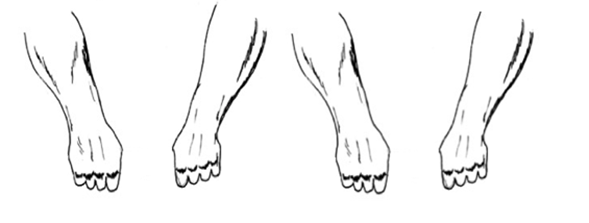
At this point, Team B’s ‘shooter’ must guess (or suss out) the location of the two unmarked ‘bones’ based on one of four possible permutations:

position.png

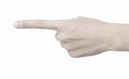
The ‘shooter’ on Team B then makes their guess as to where the location of the unmarked ‘bones’ are hiding by pointing with one hand.

HAND GESTURES

Indicates that both UNMARKED ‘bones’ are in the left hands.

Pointing to the shooter’s right indicates they think both UNMARKED ‘bones’ are in the left hands.

Indicates that both UNMARKED ‘bones’ are in the right hands.

Pointing to the shooter’s left indicates they think both UNMARKED ‘bones’ are in the right hands.

Indicates that both UNMARKED ‘bones’ are in the “inside” hands.


Pointing downward indicates they think both UNMARKED ‘bones’ are in the “inside” hands.

Outside Hand.png

Pointing upward indicates they think both UNMARKED ‘bones’ are in the “outside” hands.


Often the ‘shooter’ will make a ‘fake shot’  by moving their hands quickly, either turning back the finger or not making the complete gesture. This is done in an effort to get into the opposing player’s head by tricking those over-eager to show the wrong selection into revealing the position of the unmarked ‘bone’.

If the ‘shooter’ of Team B does not manage to guess the location of either of the two unmarked bones, their team must surrender two tally sticks to Team A, who will then continue the game by hiding the ‘bones’ once again.

If the shooter of Team B manages to guess the location of only ONE UNMARKED ‘bone’, their team must surrender one of the Tally Sticks to Team A, who will then continue the game by hide the ‘bones’ once again and Team B will have another chance to guess which hand the remaining UNMARKED ‘bone’ is.

If the shooter of Team B guesses the location of BOTH UNMARKED ‘bones’, then their team wins control of the ‘bones’ and it is now Team A’s turn to guess.

The game continues back and forth in this manner until one team has won all of the ‘Tally Sticks’ from the other team, with the ‘King Stick’ being the last surrendered.


The additional rules are fairly simple: 

Players can only play for one team, and may not switch teams until the end of the game, though in important competitions a player must stay with their own team.

When a player is ready to show the ‘bones’, they must show them as they are, and cannot change their position, otherwise the ‘bone’ are forfeited to control of the opposing team.

A game can also be forfeited in the event of an opposing team member holding two bones in one hand when the ‘shooter’ points.

OTHER NOTES

It is customary that during play, spectators will often place bets on teams, or individual matches within the game between one ‘shooter’ and the other team's ‘bone’ hiders.

While there is no official time limit for games, average matches typically last roughly an hour and a half, though some games played for high stakes could last for several hours, or even days, with the “Tally Sticks’ passing from one side to the other many times as one team nearly wins, then loses their sticks again to the other side, and back again, before the ‘King Stick’ is finally won. In these serious high stakes games, in which the teams often play for pots of thousands of dollars, a judge will be appointed to keep the contest fair.

PLAYING AT HOME OR ON THE ROAD

For those wishing to play an impromptu game, or if they lack proper equipment, the ‘Tally Sticks’ can be substituted with pens or pencils, and the ‘bones’ can be substituted with large rubber erasers.

If there are only two players available, then the rules can be simplified, with fewer ‘Tally Sticks’, only one pair of ‘bones’ used, and the guess limited to right or left.