The 2019 Cascadia Convergence took place July 5-7th at the North River Reserve in Brooklyn Washington, and was a wonderful time for Cascadians to come together to connect, share and learn. This year saw vendors from around the region, a 30 foot yurt being raised as a future classroom, and discussions by Free Cascadia, Your Cascadia, the Department of Bioregion, Olympia Ecotopians, and Seattle CascadiaNow on creating a centralized backbone for coordinating ideas, resources and events. The Department of Bioregion also provided the Cascadia Bus to help get everything down there.
2019: Pride with Purpose - Event Recap
50 years after that watershed day of the Stonewall riots, Cascadians assembled at the Seattle Pride parade route and hung the completed murals on the sides of the Cascadia Bus. We extended an open invitation to all to join us in commemorating half a century of the LGBTQ2I+ movement. Wonderfully, many new faces joined us before the parade began..
Your Chinook Wawa Word of the Day: Tupso
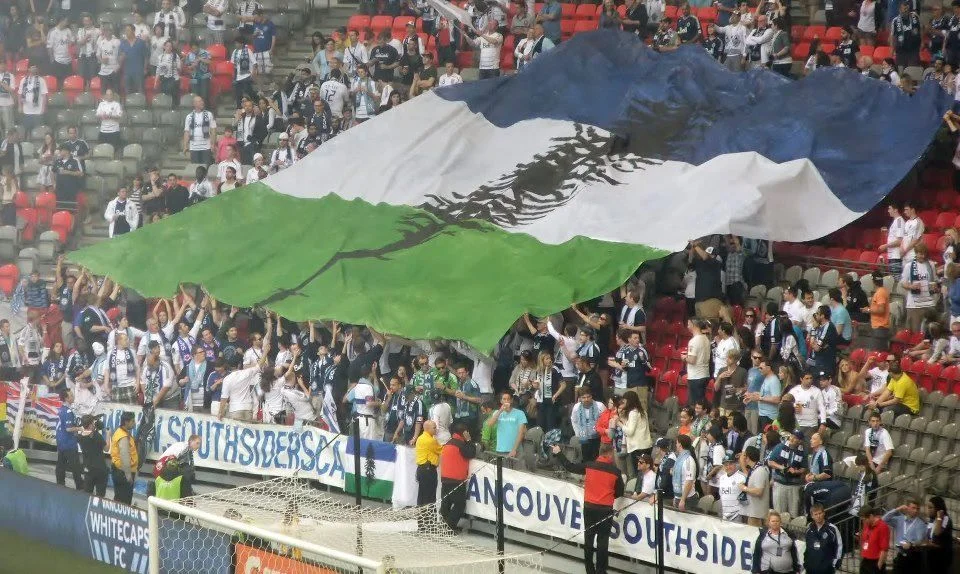
Seattle Sounders reveal massive Cascadia Rainbow TIFO Display for Pride Month against Vancouver Whitecaps
Introducing Cascadia Karen - Using her powers for Good!
Meet Cascadia Karen! Cascadia Karen is a work-a-day superhero. Between the school run, organic gardening, yoga and Bunco, she makes time to protect the Cascadian way of life. She realized that with great power comes great responsibility, so she is here to shine a light on how local businesses and citizens can live up to Cascadian values. Don’t worry, as a women of a certain age, she’s not afraid to talk to the Man-ager.
Your Chinook Wawa Word of the Day: Hyas
HYAS
[hy-AS'] or [hay-ASH]— adjective, adverb.
Meaning: Big, great, vast, large, auspicious, powerful, important, celebrated, very.
Origin: Of obscure origin. Possible corruption of Nuu-chah-nulth iyahish "many", “much”
While similar in use to the word skookum, hyas generally has connotations of greatness, importance, or auspiciousness rather than outright strength or power.
"Hyas Sunday" was a term for a holiday, like Christmas or Fourth of July, and “hyas mahcook” could mean “a great price” or “something dear”, while “Hyas Tyee” refers to a high chief, a big boss, or even a king. This was also the common title used for the famous chiefs of the early era, such as Maquinna of the Nuu-chah-nulth First Nation.
The word can also be applied to size, such as “hyas wawa” (to shout), "hyas ahnkutte" (a long time ago), “hyas stick” (big tree/log; big/great woods/forest), or “hyas lamonti” (the high mountains).
One might exclaim "okoke house yaka hyas” (that house, it is large) upon seeing a "hyas house" (mansion), and it would not be unexpected to find a large "hyas tick-tick” (clock) inside. It could even be duplicated for emphasis, such as in “hyas hyas lamonti” (the deep mountains; remote faraway mountain country).
In addition to its use as a general term for size, hyas could also be used to mean "very" or "very well", in which case it usually comes in front of the word or phrase it is modifying, such as “Hyas tenas” (very small) or "hyas kloshe" (very good), as in "hyas yaka mamook wawa Chinook lalang" (they can speak Chinook very well) or "nika hyas ticky klatawa" (I very much want to go).
The word also appears as “hyas hyas stone illahee, meaning the "greatest and biggest land of stones", or "the great barren high country" in Paul St. Pierre's novella Breaking Smith Quarter Horse. The context of the title is the vast and diverse inland alpine areas of the Coast Mountains, flanking the Chilcotin region of British Columbia where the action of the novella takes place.
The expression ‘High muckamuck’ or “High Mucketymuck’ is a corruption of “hyas muckamuck”, meaning "one who sits at the head table", i.e. an official, a bigshot, or a VIP. In modern blue-collar usage, this word is one of many mildly sarcastic slang terms used to refer to bosses and upper management.
Some scholars of Chinook Wawa believe that the words “hyas” and “hiyu” share the same origin and only one or the other may have been known or used in certain areas or periods.
Today the word lives on in local names; the town of Hyas is situated near Norquay in Saskatchewan, while Hyas Lookout and Hyas Creek can both be found in Clallam County in Washington, and no less than three Hyas Lakes are located in Washington, with a fourth in British Columbia.
Organizing Bioregionally: By Daniel Christian Wahl
Seattle Cascadia PRIDE Contingent! June 30th
Native Place Names - Loowit (Mt. St. Helens)
Cascadia Football issues strong statement of anti-racism and discrimination
Cascadia wins Chagos Island match 6 to 3
Catching up with the 2019 Cascadia Dirt Cup
For those not familiar, Race Cascadia and the Dirt Cup is a mountain biking competition that showcases, builds and protects Cascadian trails and forests. The Cascadia Dirt Cup is the the Northwest's premiere enduro mountain bike race series.
Defining Cascadia: Crossing borders to improve ecology, economy, and the arts in the Pacific Northwest
View the full video of the Defining Cascadia: Crossing borders to improve ecology, economy, and the arts in the Pacific Northwest Panel DIscussion hosted at Horizon Books on May 17th 2019. The Cascadia Dept of Bioregion was proud to partner with Cascadia Magazine and Upzones Podcast to present a panel discussion about thinking beyond borders in Cascadia.
Cascadia tops GDP per capita with sustainable economy & transparent banking practices.
Taken together, British Columbia, Oregon and Washington (Cascadia) had a combined GDP of more than a trillion US dollars a year, and a population just under 16 million in 2017 placing Cascadia as the 9th highest GDP per capita in the world. More startling however, is that Cascadia is the ONLY economy in the top ten, in which fossil fuel extraction or serving as a tax haven is even present.
Happy Cascadia Day! 2019 Roundup in Pictures
2019 Cascadia Day in pictures! See some of the hundreds of pictures, photos, celebrations from around the bioregion. Every year, we celebrate May 18th as Cascadia Day, a day to celebrate the unique culture and dynamism that makes this region so special. Hundreds of people shared posts, pictures, photos and local businesses, libraries, elected officials and public areas put up displays and gave shout outs.
Why is Bioregionalism Important?
It’s a question that for many Cascadians is a no-brainer. Taking care of where we live not only feels good, but it’s vital to our survival. We know this. We know about climate change, deforestation, fossil fuels, and other serious and real dangers to our planet, but how can this idea of bioregionalism, help us combat these issues?
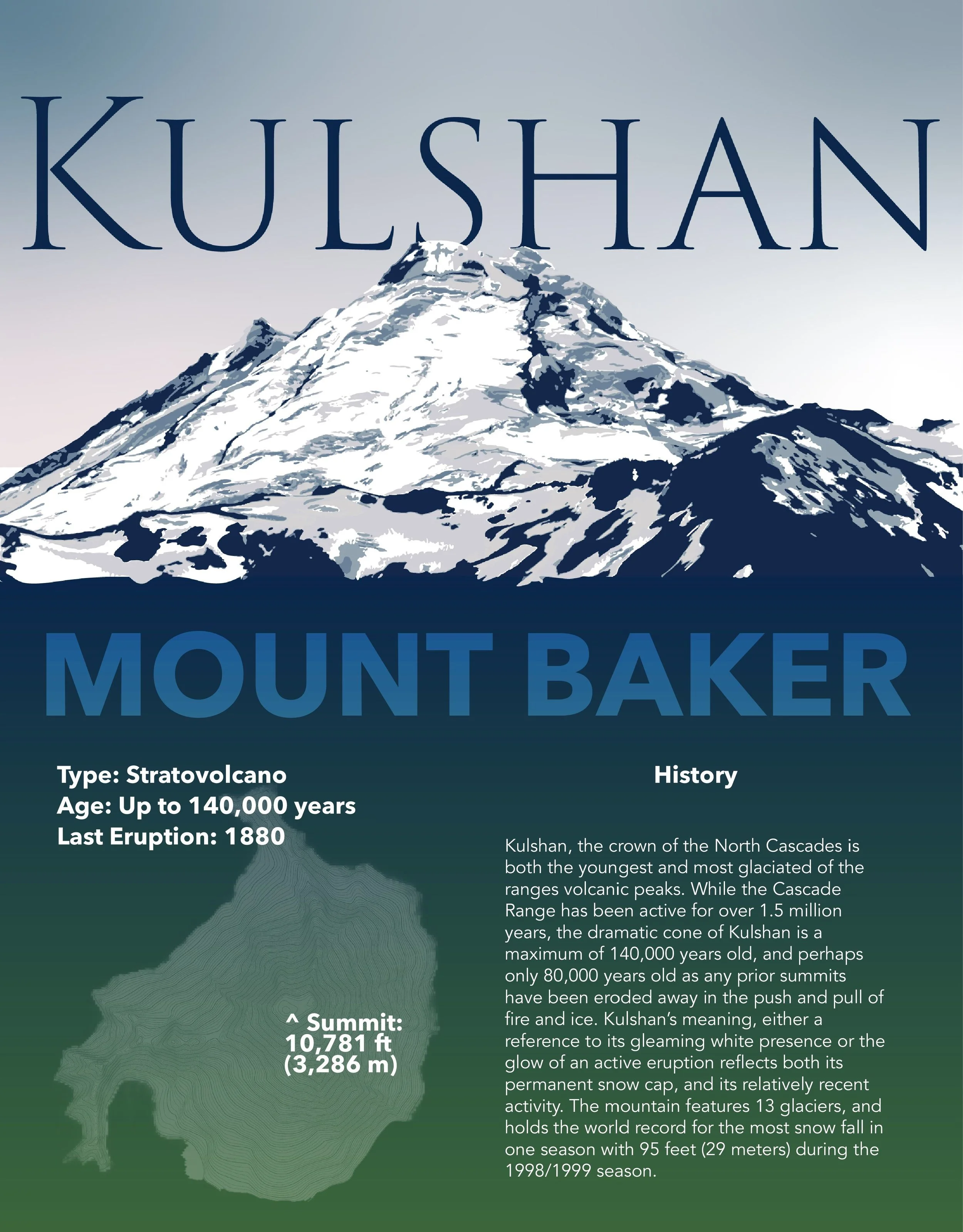
Native Names - Kulshan (Mt. Baker)
The Department of Bioregion is proud to partner with the University of Washington StatCom Program
Cascadia Culture Week Resource Kit
Cascadia Culture week is May 17th - May 26th this year. With it comes an opportunity to educate and celebrate our beautiful bioregion. We hope each of you join us in celebrating Cascadia Culture Week, the time before and after Cascadia Day each year in which we celebrate the incredible diversity and culture that make this region so wonderful.